


What Are Chafing Dishes & 5 Top Alternatives
Chafing dishes have long been the default for keeping food warm at buffets an
Read more
KickStarter Projects we love
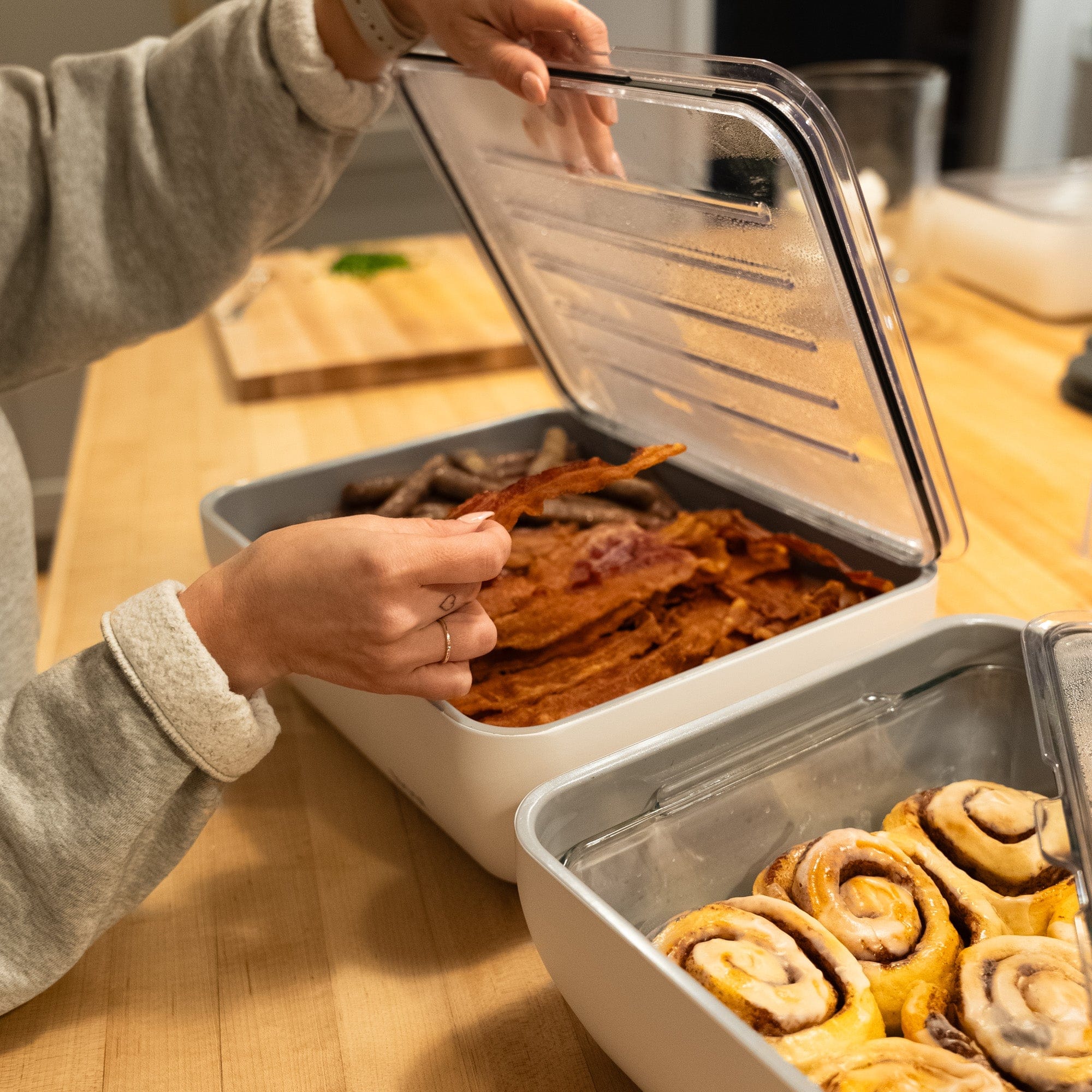
If you’ve ever prepared food for a crowd, catered an event, or simply wanted to keep dinner warm until serving, you’ve likely encountered the challenge of maintaining a safe, hot holding temperature. Many home cooks and food service professionals struggle to keep food at the right temperature without drying it out or compromising food safety.
Whether you're juggling multiple dishes or waiting for guests to arrive, holding food at the correct temperature is crucial—not just for maintaining flavor and texture but also for preventing bacterial growth that could lead to foodborne illnesses. In this guide, we’ll explore the science behind hot holding temperature, the risks of the “danger zone,” and the best methods for keeping your food safe and delicious.
Hot holding temperature is the minimum safe temperature at which cooked or heated food must be maintained to prevent the growth of harmful bacteria. The USDA and FDA recommend that the hot holding temperature is 140°F or higher. This prevents bacteria from multiplying, ensuring food remains safe to eat over extended periods.
Hot holding keeps food warm after it has been cooked.
Cooking temperature is the minimum internal temperature required to fully cook food (e.g., poultry must reach 165°F internally before serving).
Holding food at a cooking temperature for too long can dry it out or overcook it, so balance is key.
The science behind hot holding temperature is rooted in microbiology and food safety principles. Bacteria, particularly pathogenic bacteria that cause foodborne illnesses, thrive in a temperature range known as the "danger zone," which spans from 40°F to 135°F. Within this range, Salmonella, Escherichia coli (E. coli), Clostridium perfringens, and Listeria monocytogenecan multiply rapidly, doubling in number within 20 minutes, significantly increasing the risk of foodborne illness, making it essential to keep cooked foods at a safe temperature.
Hot holding at 140°F or above prevents bacterial growth because most foodborne pathogens cannot multiply effectively at such high temperatures. At temperatures closer to 150°F to 165°F, bacterial activity slows significantly or ceases altogether. Some bacteria, like Clostridium perfringens, can form spores that survive cooking temperatures but do not germinate and multiply when food is held at the proper hot holding temperature. This is especially important for ground meats, poultry, and seafood, which tend to spoil rapidly and retain moisture—an ideal environment for bacterial growth if left at unsafe temperatures.
Learn more: The Importance of Temperature Control in Food Prep, Transport, and Service
Food can be held at hot temperatures for a maximum of four hours before you should toss it, according to the FDA Food Code and USDA food safety guidelines. However, if the food remains at or above 140°F, it can technically be held indefinitely, as long as it does not drop into the danger zone (40°F–135°F) or dry out. Check your hot dishes regularly with a food thermometer to ensure they’re holding at the right temperature.
As long as food stays at or above 140°F, bacterial growth is inhibited, and the food remains safe to eat. However, prolonged holding can dry out or overcook your food and make it unappetizing after a certain amount of time.
If food falls below 140°F but remains above 40°F, it should be eaten or discarded within four hours to prevent bacterial growth. After four hours in the danger zone, food must be thrown away as bacterial levels may have reached unsafe levels.
If food drops below 140°F but is caught within two hours, it can be reheated to 165°F for at least 15 seconds to kill vegetative bacteria. After reheating, it can be returned to hot holding at 140°F or higher.
To safely serve and hold your dishes at the proper hot holding temperature, you’ll need to use the right equipment and techniques. Here are some of the most effective methods and best practices to keep food at a safe temperature.
Serving food immediately after cooking is the best way to keep food at a safe temperature while preserving its quality and flavor. The longer food sits, even in hot holding equipment, the more it risks temperature fluctuation and deterioration in texture, flavor, and appearance.
Coordinate timing: Cook food as close to serving time as possible to ensure your food stays both fresh and safe.
Pre-warm plates: Warming your plates prevents hot food from losing its temperature on cold plates. Place ceramic or stone plates in a low-temperature oven, or run your dishes under hot water and dry well before plating.
Use heat-retaining cookware: Cast iron or ceramic dishes help retain heat for short periods if food must sit for a few minutes before serving.
Warming equipment is a game changer for keeping food hot and fresh for extended periods of time.
Warming trays and buffet servers are ideal for catered events, buffets, and serving lines. These are usually wired to provide consistent heat for an extended period of time. For best results, food should be kept covered to retain heat and moisture.
Chafing dishes are great for keeping food warm at buffets or large gatherings. These use water baths heated by Sterno fuel canisters to provide even, indirect heat to food.
Slow cookers and crockpots are best for dishes like soups, stews, sauces, and shredded meats. These appliances typically have pre-programmed settings that keep food at 140°F for an extended period; they also feature auto-shutoffs for peace of mind.
Warming drawers under most ovens can be used to hold food at a steady temperature before serving. These not only keep food at a safe temperature, but they also maintain moisture levels with humidity controls often located on the oven's control panel or the drawer itself. They’re especially useful for keeping cooked meats, bread, and fried foods warm.
You might like: How to Keep Food Warm at a Party
If you have access to a kitchen, using an oven or stovetop is a great way to maintain the right temperature without drying out or overcooking your dish.
Set the oven to 200°F–250°F to keep food hot without cooking it further.
Keep food covered with foil or lids to retain moisture and prevent drying.
Place a pan of water in the oven for extra humidity if needed.
Use primarily for baked dishes, roasted meats, and casseroles.
Use low heat settings to maintain the warmth of soups, stews, and sauces.
Stir food occasionally to prevent burning or uneven heating.
For delicate foods (like sauces or gravies), use a double boiler or a simmering water bath to keep them warm without scorching.
Learn more: Keeping Food Warm from Stove to Table: Navigating the Challenges
Using insulated serveware is one of the most effective ways to keep food hot while transporting and serving. Thermal food carriers help maintain temperatures well above the danger zone for extended periods without needing electricity or a fuel source. They help dishes retain moisture and freshness as well, keeping food appetizing as well as safe for guests.
Thermal serveware from Host Modern is designed to keep hot food safe while traveling and serving. With a non-slip base, secure and stackable lids, and an insulated carrier, our serveware is the most convenient option for keeping your food hot on the go.
Shop Host Modern’s thermal serving dish →
Keeping food at the right temperature doesn’t have to be complicated. By using your oven, slow cooker, warming trays, or an insulated serving dish from Host Modern, you can easily maintain safe and enjoyable meals for your family and guests. A little planning and the right techniques will help ensure that every dish is served hot, flavorful, and safe to eat.
For effortless food safety, Host Modern’s insulated serveware keeps your dishes at the perfect serving temperature—so you can focus on enjoying your meal with confidence.
Shop Host Modern’s thermal serving dishes →
You might also like:
By Host Modern
- Mar 24, 2025
- 0 Comments


Chafing dishes have long been the default for keeping food warm at buffets an
Read more
Food safety is closely tied to temperature, especially once food leaves the s
Read more
Warm tortillas are the quiet hero of any taco bar When they come to the tabl
Read more
Warm appetizers make an instant impression at any party When guests arrive,
Read more
Buffet-style dining invites family and friends to relax comfortably for a mea
Read more
Quick answer: To keep mashed potatoes warm for a party, transfer them to a va
Read more
Hot cakes, pancakes, flap jacks Whatever you grew up calling them, one thing
Read more
Thanksgiving is a celebration of abundance, provision, and generous hospitali
Read more
Whether it’s your Sunday morning tradition or a large neighborhood brunch, us
Read more
Bold, comforting, and made for sharing, this buffalo chicken tater tot casser
Read more
If you've ever craved that savory, slightly smoky hibachi fried rice from you
Read more
Preparing burgers at the perfect temperature is a delicate balance of moistur
Read more
For centuries, empanadas have won over food enthusiasts with their crispy cru
Read more
Chatting families, clinking glassware, and a relaxed and warm atmosphere give
Read more
A burger straight off the grill is everything it should be: crispy on the out
Read more
There’s magic in the moment guests ring your doorbell with smiles on their fa
Read more
When the air smells like charcoal and the table fills with color, you know yo
Read more
Whether they’re known for perfectly charred kabobs or slow-smoked ribs, the g
Read more
This hot dish isn’t just a party favorite, it’s yours, too Your guests will
Read more
Heat sealed vacuum Here’s what’s happening: You place hot food inside the d
Read more
Every host needs a recipe in their back pocket that’s easy to throw together,
Read more
Scrambled eggs are best when they're warm, soft, and freshly made, but keepin
Read more
Short answer: In our own tests, an insulated thermal serving dish kept food a
Read more
Transporting hot food can be a challenge, especially when juggling multiple d
Read more
Quick answer: The most reliable way to keep food warm at a party is a double-
Read more
When you serve a hot dish, the goal is often to keep it warm for as long as p
Read more
Food isn't just a matter of taste; it's a symphony of safety, quality, and ex
Read more
Transporting food, whether it's for a catering event, meal delivery service,
Read more
In the culinary world, the journey from the stove to the table is short in di
Read more
Serving food that's just the right temperature is an art Whether you're host
Read more